In short
- Girando por Salas has chosen 30 artists from 815 valid applications, and the public vote only made a difference for three of them: Yoly Saa, Vermú and Oslo Ovnies.
- Seven of the 30 start from folk or roots music, from the jotas of Casapalma to the Castilian electronica of Dulzaro, alongside a strong block of punk and guitars with FUET!, Memocracia, Sandré and EZEZEZ.
- Each musician is paid up to €500 per concert, the venue receives another €500 and each project can apply for up to €3,250 to record or promote its music.
- The tours start at the end of November and run until 30 May 2027, with at least six dates per artist outside their home region and tickets priced between €5 and €12, although the venues and dates have not yet been announced.
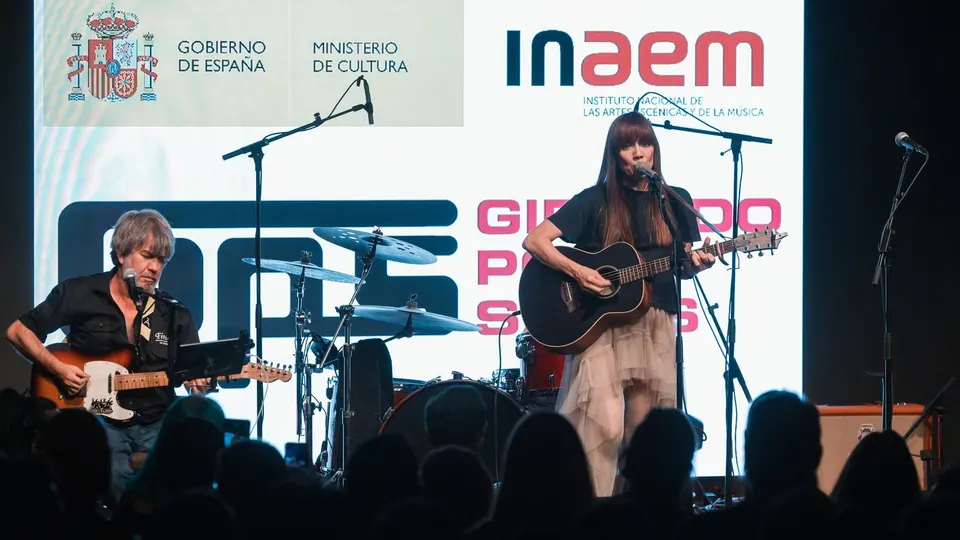
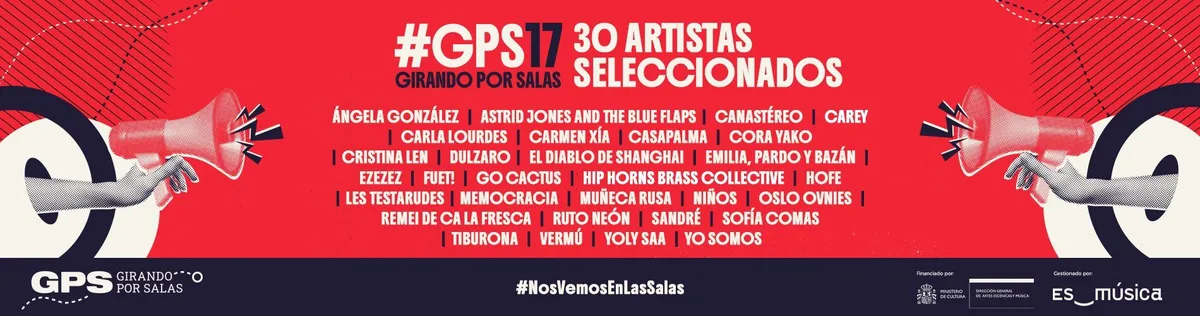
Casapalma takes Cantabrian jotas into electronica; FUET! play hardcore in Madrid; Hip Horns Brass Collective sound, from Barcelona, like a New Orleans brass band. All three are among the 30 artists selected for #GPS17, the seventeenth edition of Girando por Salas, which published the list on Tuesday 3 November. Between the end of November and 30 May 2027, each of them will play at least six times in venues far from home with financial support from the circuit.
The grants cover what costs an up-and-coming band the most: playing far from home, with the fee and travel paid for every date. Two of the chosen acts, EZEZEZ and Sandré, have already featured in our emerging music section, and FUET! and Memocracia are also among the 20 acts chosen for the 2027 AIEnRuta tour.
What Girando por Salas is and how the 30 were chosen
GPS is the nationwide popular music circuit funded by the Ministry of Culture, through the Directorate-General for Performing Arts and Music, and run by the Spanish Music Federation, Es_Música. It is aimed at emerging artists: the rules require them to have released at least six songs and a maximum of three LPs. Over sixteen editions it has supported more than 525 bands and solo artists, according to the organisation itself.
This year's call received 927 applications, of which 815 met the requirements. A professional committee makes the choice, but the public also voted: almost 25,000 votes, a record according to GPS, and the 20 most-voted proposals received one extra vote on top of the jury's. Only three of those twenty ended up among the selected acts: Yoly Saa, eighth in the vote; Vermú, seventeenth, and Oslo Ovnies, twentieth. The most-voted acts, Téyou, Prieto Picado and Moni Motes, have missed out.
The three-album cap shows in the list. Vermú, Sandré and Sofía Comas have released their third album this year, and they sit alongside projects that have just made their full-length debut, such as Niños and Muñeca Rusa.
The 30 selected acts for #GPS17, grouped by style
GPS publishes the names without cities or genres. We have grouped them by the music they make, with their latest release and a link to listen to them.
Folk and roots with a fresh perspective
This is the most striking feature of the selection: seven projects working with folk or traditional song, almost always crossed with pop, rap or electronica.
- Casapalma (Cantabria). A duo of Irene Atienza and Yoel Molina who blend Cantabrian mountain song and jotas with pop and electronica. Following the album ‘JOTAS’ (2025), in October they released the EP ‘La suite de los riconchos’. Listen on Spotify.
- Cristina Len. An urban pop and R&B singer and producer who, on the EP ‘Martiago’ (2025), revives the traditional repertoire of Martiago, her family's village in the province of Salamanca, with the voices of local women. She co-produced it with Yoel Molina of Casapalma. Spotify.
- Dulzaro (Valladolid). Alberto Domínguez's project, between Castilian folk and electronica. His debut, ‘Ícaro’ (2025), features David Ruiz (La M.O.D.A.), Erik Urano and Mondra. Spotify.
- Vermú (La Roda, Albacete). Pop-rock with La Mancha folk. In March they released their third album, ‘Los Zagales’. Spotify.
- Canastéreo (Sevilla). Andalusian rock and flamenco with psychedelia; their latest album is ‘Jazmines’ (March 2026). Spotify.
- Carmen Xía (San Fernando, Cádiz). Andalusian rap that crosses hip hop with copla, flamenco and electronica. Her second album is ‘El Cuerpo’ (2024). Spotify.
- Sofía Comas (Madrid). A Montreal-born singer-songwriter; on her third album, ‘Tecuán Caroca’ (April 2026, Everlasting Records), she turns to the Mexican songbook: bolero, ranchera and son jarocho. Spotify.
Punk, post-punk and guitars
- EZEZEZ (Bilbao). Basque-language post-punk that we covered in one of our new releases round-ups. Following the singles ‘Zaunk’ and ‘Eskeleto’, they have announced the album ‘Burubero’ for 27 November. More on their page.
- FUET! (Madrid). Hardcore punk. After ‘Make It Happen’ (2025) they have released ‘Roll With It’, a taster of their second full-length album. Spotify.
- Memocracia (Burgos). Punk rock, formed in 2015. On 8 October they released ‘Cada vez más cerca’. Spotify.
- Sandré (Barcelona). Punk, post-punk and math rock; their third album, ‘Paciencia infinita’, came out in May on Calaverita Records. They have a page on ModoFestival. Bandcamp.
- Tiburona (Madrid). Pop-punk with garage and surf; their latest album is ‘Nos extinguimos’ (2024). Spotify.
- Oslo Ovnies (La Rioja). Alternative rock since 2017. Following ‘Superchampagne’ (2023), in October they released ‘Al fallo’. Their upcoming festival dates are on their page. Spotify.
- el diablo de shanghai (Barcelona). Alternative rock and garage with a post-punk undercurrent; in February they released their second full-length album, ‘Testamento’. Festival dates are on their page. Spotify.
- Go Cactus (Mallorca). A garage and surf rock trio; ‘Vidas Modelo’ (2026) is their second album after ‘Plaza Patines’ (2024), and in 2025 they played SXSW in Austin. More on their page. Bandcamp.
- Remei de Ca la Fresca (Arbúcies, Girona). Rock with spoken word, folk and lo-fi electronica; on 28 October she released the EP ‘Mesures extraordinàries’ on Bankrobber. This Friday 6th she plays Fira B! in Palma. Spotify.
Pop, pop-rock and song
- Cora Yako (Mallorca, based in Madrid). Pop-rock and indie; ‘Mil pequeños cortes’ came out in February. Spotify.
- Niños (Madrid). Formerly Niños Bravos; alternative pop with a garage feel. Their first full-length album, ‘Bravos’, came out on 23 October on Vanana Records. Spotify.
- Muñeca Rusa (Gijón). Pop-rock with a punk attitude; their first album, ‘Año Soviético’ (June 2026), features collaborations with Igor Paskual and Tigre y Diamante. Spotify.
- Yo Somos (Valencia). A pop-rock trio of Quique Gallo, Xema Fuertes and Cayo Bellveser; their second album, ‘Día grande’, came out on 16 October on El Volcán Música. Spotify.
- Yoly Saa. A Galician singer-songwriter whom GPS places in the Community of Madrid; following ‘Mar de Ardora’ (2025), her latest single is ‘El presidente de la compañía’. Apple Music.
- Carla Lourdes (Ponferrada). Singer-songwriter pop with electronic touches; she debuted with ‘El día que descubrí el lunar de tu oreja’ (2025) and her latest single is ‘San Sebastián’. Spotify.
- Ruto Neón (Region of Murcia). Bruno Laencina's project, alternative pop with electronica; following the album ‘Reset’ (2023), in September he released ‘Salabosque’ on Calaverita Records. Spotify.
- Carey (Region of Murcia). A duo of Aaron Sáez, of Varry Brava, and Antonio Turro, between pop, folk and Latin influences; their latest single is ‘Sonao’, with Muerdo. Spotify.
- Emilia, Pardo y Bazán (Talavera de la Reina). Pop-rock; in May they released ‘Qué ha sido de los planes que hicimos anoche cuando estábamos borrachos’. Spotify.
- Hofe. Igotz Mendez's project on the Basque-language urban scene, between electronica, trap and new wave; in March he released ‘Esto no es amor’ with Natalia Lacunza and Mattin. His festival schedule is on his page. Spotify.
- Ángela González.
Soul, ska and brass
- Astrid Jones and The Blue Flaps. Soul, jazz, reggae and African rhythms in a project active since 2013; their second album is ‘Shine’ (2025). Spotify.
- Hip Horns Brass Collective (Barcelona). A New Orleans-style brass band, with hip hop, funk and gospel. They made their full-length debut with ‘KREWE’ (2024) and before that dedicated the EP ‘Brassvillain’ to MF DOOM and Madlib. Spotify.
- Les Testarudes (Barcelona). Nine women playing ska, rocksteady and reggae; they won Sona9 in 2023 and in May released ‘Ai, Mare!’. Spotify.
What the selected acts receive
The money is paid per concert and per musician, not per band. According to the rules, each member receives €250 as a fee and another €250 for expenses covering travel, accommodation and food for each date. Expenses rise to €450 when travelling to or from the islands, Ceuta or Melilla. To be paid, each musician must be registered with Social Security on that day. The venue receives €500 per concert, an improvement in this edition, and box office takings are split 50% between venue and artist.
Apart from the tour, each project can apply for up to €3,250 plus VAT to record an album, an EP or a music video, or to promote the concerts, with a deadline to spend it of 4 June 2027. The artist provides the backline and commits to playing at least six concerts; if they fail to do so without a force majeure reason, GPS can cancel all the grants.
When and where the concerts start
The rules set the period between 30 November 2026 and 30 May 2027; the circuit's website gives 1 December as the first day. Each artist will play at least six concerts outside their autonomous community, or more than 300 kilometres from their city if within it. This year 192 venues have signed up, and the GPS office matches their preferences with those of each band to finalise the schedule.
That schedule is not yet public. The rules require the GPS communications office to approve every announcement and the official poster to be used, so the venues and dates will become known as the circuit and each artist announce them. What has been decided is the price: none of these concerts will be free and tickets will cost between €5 and €12, fees included.
The full list and the rules are on the Girando por Salas website, which in previous editions has gradually published the cities on each tour.
Sources: list of selected acts and public vote for #GPS17 and the call rules at girandoporsalas.com; official artist profiles on Spotify, Bandcamp, Apple Music and their websites, and music press for the origins of some projects. Accessed 3 November 2026. Contact: hola@modofestival.com.
Newsletter · every Thursday